Empty Calories: The Top 10 Foods That Give You Nothing (and What to Eat Instead)
The honest top 10 of empty-calorie foods — sugary drinks, alcohol, pastries and the rest — why they wreck a training diet, and a nutrient-dense swap for every one of them.
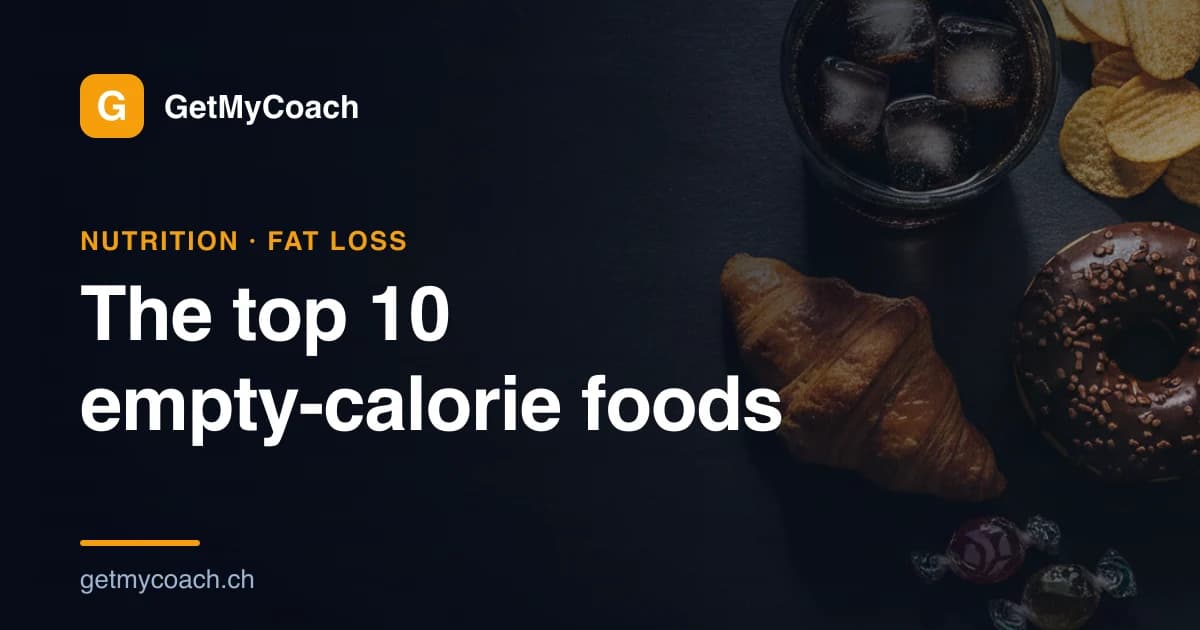
"Empty calories" is one of the rare bits of nutrition jargon that's actually useful. It describes food that charges you a lot of energy and gives almost nothing back — no protein to hold your muscle, no fibre to keep you full, barely a vitamin in sight. For anyone who trains, that's the worst trade on the menu: the calories land, the recovery doesn't.
This is the honest top 10 — the foods that most reliably fill your day with energy you can't put to work — and, more usefully, the smarter swap for each. It's not a ban list. It's a better-trade list.
The short version: Empty calories come from added sugar and refined or solid fat, with almost no protein, fibre, vitamins or minerals attached. They're not poison — the problem is they crowd out the food that actually feeds training and recovery, and they're easy to overeat because they barely fill you up. Swap the worst offenders for a version that carries some protein or fibre and most of the job is done.
What actually makes a calorie "empty"
A calorie isn't empty because it's sinful. It's empty because of what's missing: protein, fibre, and the vitamins and minerals your body runs on. Three ingredients do most of the damage:
- Added sugar — energy with nothing else bolted on. Spikes blood sugar, then drops you into a hunger dip an hour later.
- Refined or solid fat — the fat in pastries, fried snacks and processed baked goods. Very calorie-dense (9 kcal a gram), easy to eat a lot of without noticing.
- Alcohol — 7 kcal a gram, second only to fat, and your body has no way to store it, so it burns the alcohol first and parks everything else as fat.
The tell is always the same: lots of calories, almost no protein or fibre, and you're hungry again soon after. Nutrient-dense food does the opposite — it carries something your training can use, and it actually fills you up.
The top 10 empty-calorie foods (and what to eat instead)
Ranked by how much quiet damage they do to a training diet — energy-dense, easy to overeat, and offering next to nothing for recovery.
1. Sugary soft drinks & energy drinks
The undisputed number one. A can of regular cola is around 35 g of sugar and ~140 kcal that don't fill you up at all — you could drink three before your body registers a single one as "food." Energy drinks add caffeine on top of the same sugar load. This is the single easiest win in most people's diet.
Swap: Water, sparkling water, unsweetened tea or coffee, or a zero-sugar version if you want the fizz and the hit without the calories.
2. Alcohol
Beer, wine and spirits are almost pure empty calories — roughly 180–200 kcal a pint or large glass, with zero protein or fibre and next to no micronutrients. Worse, while your body clears the alcohol it stops burning fat, and the food that comes with a night out (chips, kebab, "just one more") does the real damage.
Swap: There's no clean nutritional swap for alcohol — the honest move is fewer drinks, smaller ones, and alternating with water. If you're chasing a body-composition goal, this is usually the biggest hidden lever.
3. Sweets, candy & gummies
Pure sugar with a flavour. A handful of gummies or a chocolate bar is 200–300 kcal gone in a minute, no protein, no fibre, and you're hungrier for the sugar crash afterwards.
Swap: Fruit for the sweetness plus fibre, a couple of squares of dark chocolate instead of a whole milk bar, or a protein bar when it's really a hunger problem in disguise.
4. Pastries, croissants & doughnuts
The double whammy: refined flour, added sugar and solid fat in one package. A croissant is around 250 kcal, a filled doughnut more — and almost none of it is protein. They're engineered to be eaten fast and leave you hungry by ten.
Swap: Overnight oats or quark with berries, or eggs on wholegrain toast — same "breakfast treat" slot, but with protein and fibre that actually hold you to lunch.
5. Crisps & salty snacks
Fried, salted, refined — a small bag of crisps is around 150 kcal with almost nothing your body needs, and the salt-fat combination is built to make you finish the bag and reach for the next.
Swap: Lightly salted nuts (fat, but real nutrients and satiating), roasted chickpeas, or plain popcorn if you want the volume for far fewer calories.
6. Fruit juice & bought smoothies
The "healthy" trap. Juice strips the fibre out of fruit and leaves the sugar — a glass of orange juice is close to a glass of soft drink in sugar, minus the whole fruit that would have filled you up. Big bought smoothies are often 300 kcal-plus of blended sugar.
Swap: Eat the whole fruit — the fibre changes everything about how it hits you. If you want a smoothie, blend it yourself around a real protein source (quark, skyr, protein powder) so it becomes a meal, not liquid sugar.
7. Sugary breakfast cereals
Marketed as breakfast, closer to dessert. Most sweetened cereals are refined grain plus a heavy dose of added sugar, so you spike, crash, and snack before lunch.
Swap: Oats, a high-protein muesli, or plain wholegrain cereal you sweeten yourself with fruit — plus a protein source (milk, quark, skyr) alongside.
8. White bread & white rolls
Not "bad," but close to empty: refined flour with most of the fibre and micronutrients milled out, so it digests fast and does little to keep you full. The issue is rarely the bread itself — it's what a fast, unfilling carb pushes you to eat next.
Swap: Wholegrain or rye bread, or sourdough — more fibre, steadier energy, and genuinely more filling per slice.
9. Ice cream & sugary desserts
Sugar and solid fat again, and very easy to eat a lot of — a couple of scoops is comfortably 300 kcal with barely any protein. A fine occasional treat; a daily habit that quietly eats your calorie budget.
Swap: Greek yoghurt or skyr with fruit and a little honey, or one of the higher-protein ice creams if you want the real thing with the numbers under control.
10. Sweetened coffees & hidden-sugar sauces
The calories nobody counts. A large flavoured latte can hit 250–400 kcal, and ketchup, sweet chilli, barbecue sauce and many dressings pour sugar over otherwise good food. Individually small, collectively the reason a "clean" day isn't landing.
Swap: Plain coffee, or milk instead of syrup and cream. For sauces: mustard, hot sauce, herbs, lemon, or plain yoghurt-based dressings you sweeten yourself, if at all.
The swaps at a glance
| Empty-calorie food | Why it's empty | Swap it for |
|---|---|---|
| Sugary soft & energy drinks | Liquid sugar, zero satiety | Water, tea, coffee, zero-sugar drinks |
| Alcohol | 7 kcal/g, no nutrients | Fewer/smaller, alternate with water |
| Sweets & candy | Pure sugar | Fruit, dark chocolate, protein bar |
| Pastries & doughnuts | Sugar + refined fat | Oats, quark & berries, eggs on wholegrain |
| Crisps & salty snacks | Fried refined starch | Nuts, roasted chickpeas, popcorn |
| Fruit juice & bought smoothies | Sugar without the fibre | Whole fruit, homemade protein smoothie |
| Sugary cereals | Refined grain + sugar | Oats, high-protein muesli + milk/quark |
| White bread | Refined, low fibre | Wholegrain, rye, sourdough |
| Ice cream & desserts | Sugar + solid fat | Skyr with fruit, higher-protein ice cream |
| Sweet coffees & sauces | Hidden sugar | Plain coffee, mustard/herbs/lemon |
How to actually use this (don't just ban things)
A total ban backfires — cut out everything you like and you'll blow the whole thing by the weekend. The point isn't zero empty calories. It's to stop the easy ones from crowding out the food that feeds your training.
- Fix the drinks first. Sugary drinks, juice and alcohol are the biggest, easiest wins because liquid calories don't fill you up at all. This one change moves the needle more than any food swap.
- Budget, don't ban. A square of chocolate or a beer that fits your day never becomes a binge. A total ban almost always does.
- Add protein and fibre to the treat slot. Most empty-calorie foods sit in a specific slot — breakfast, the afternoon snack, dessert. Swap in a version that carries protein or fibre and you keep the habit while losing the problem.
- Judge the week, not the meal. One croissant isn't a failure. A croissant every morning is a pattern worth swapping.
Why this matters more when you train
Two reasons empty calories hit lifters and athletes harder than they hit anyone else.
First, they crowd out recovery. You have a calorie budget, and every 300 empty calories is 300 you didn't spend on protein to rebuild muscle or on the carbs and micronutrients that fuel hard sessions. You can eat "enough" and still under-feed your training.
Second, they don't fill you up, so they make a fat-loss phase far harder than it needs to be. The same calories from protein and fibre keep you full for hours; from sugar and refined fat they're gone in minutes and leave you hunting for more. If you're dieting, that's the difference between a plan you finish and one you quit — more in our honest guide to losing weight, and on how much protein you actually need.
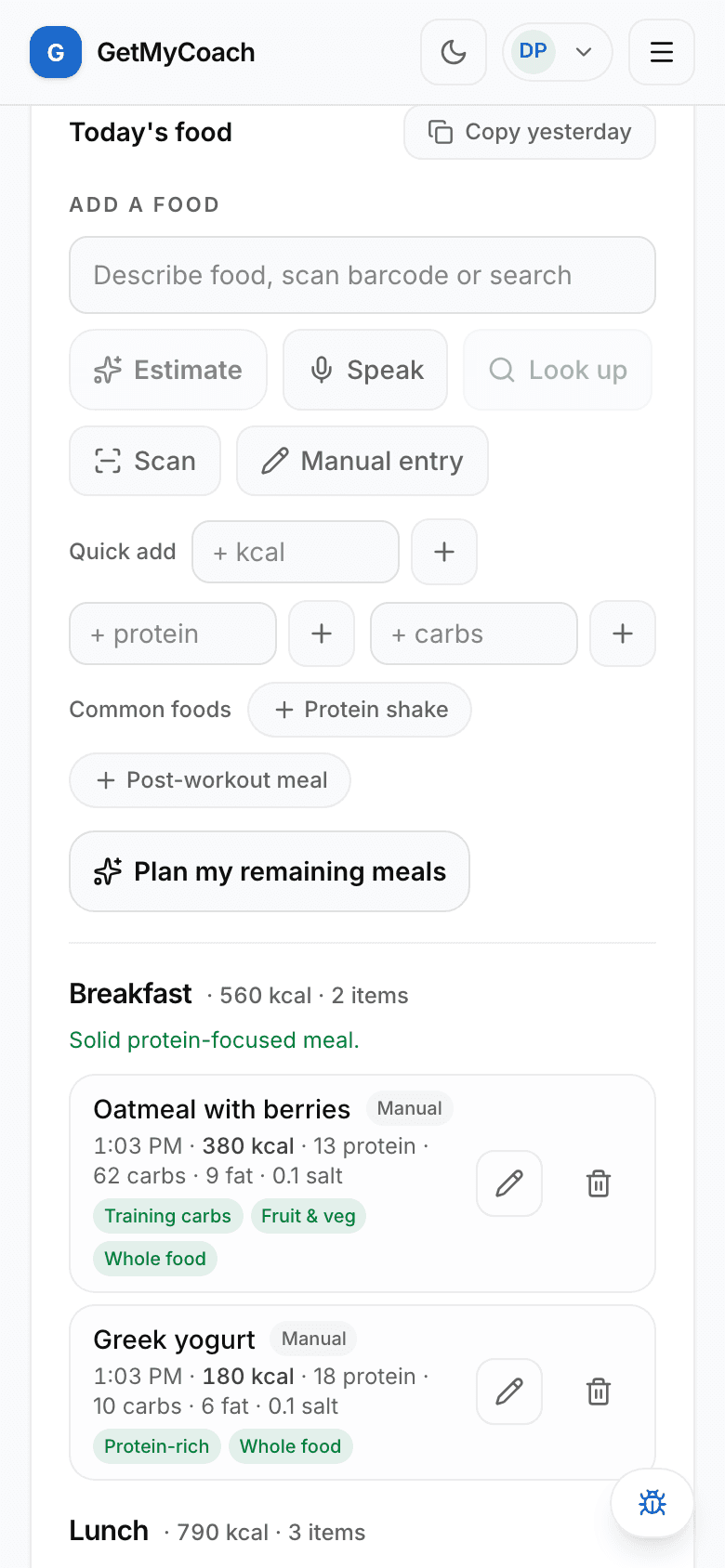
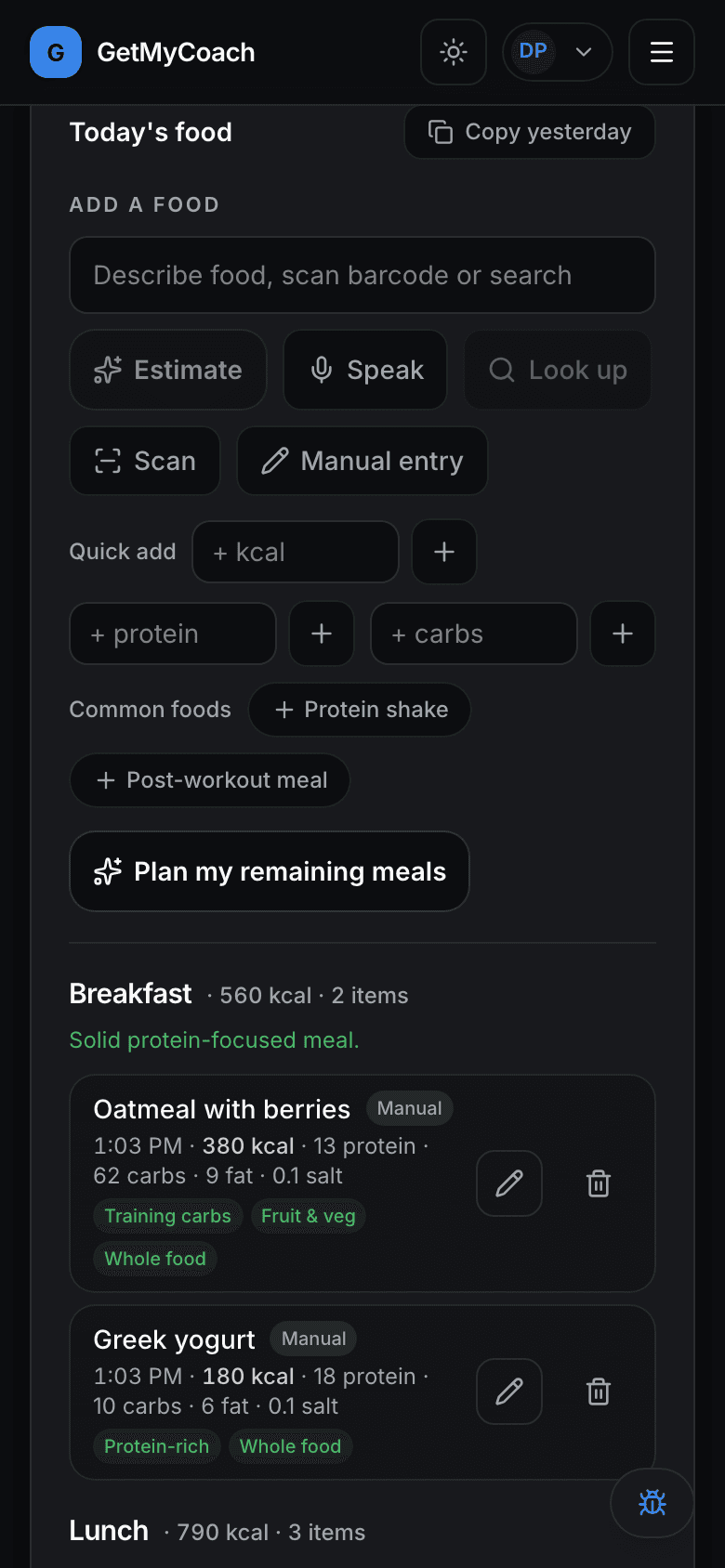
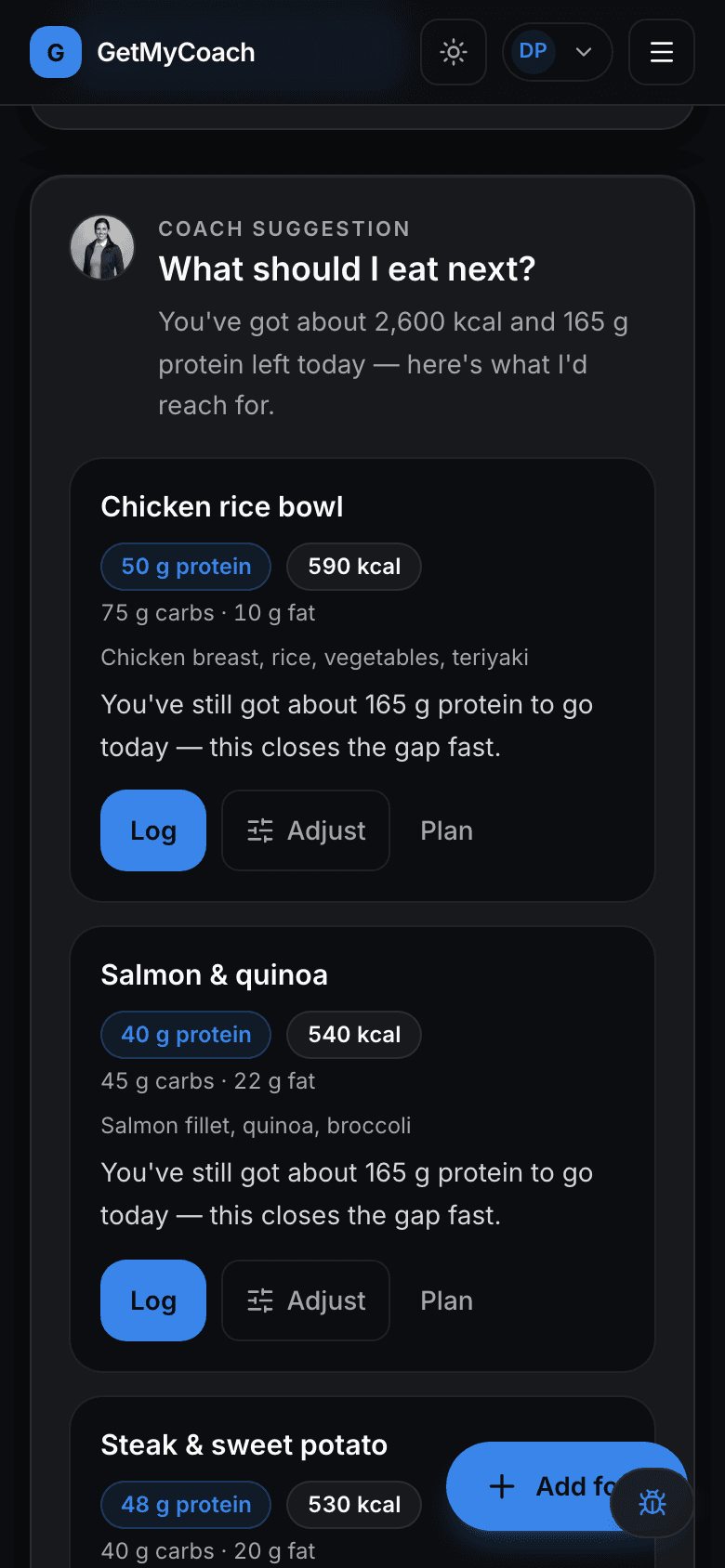
This is exactly what GetMyCoach is built for: it scores what you eat for protein and food quality, flags the empty-calorie items honestly, and turns the calories and protein you have left into concrete meals worth eating.
Frequently asked questions
What are empty calories?
Calories from added sugar, refined or solid fat, or alcohol that carry almost no protein, fibre, vitamins or minerals. Your body gets the energy but nothing else it can use — so the calories count, but they don't feed your training or keep you full.
Are empty calories bad for you?
No single food is "bad." The problem is what empty calories crowd out: eat a lot of them and there's less room in your day for the protein, fibre and micronutrients that actually support training, recovery and staying full. In moderation, as part of an otherwise good diet, they're fine.
What foods have the most empty calories?
The biggest offenders are sugary soft and energy drinks, alcohol, sweets, pastries and doughnuts, crisps, fruit juice and bought smoothies, sugary cereals, white bread, ice cream, and sweetened coffees and sauces. Drinks tend to do the most damage because liquid calories don't fill you up.
How do I cut empty calories without giving up everything I like?
Don't ban — swap and budget. Fix your drinks first (the biggest easy win), swap each treat for a version that carries some protein or fibre, keep small amounts of what you love inside your day, and judge the week rather than any single meal.
The bottom line
Empty calories aren't a moral failing and they're not poison. They're just a bad trade — energy in, nothing useful back — and they're easy to overeat precisely because they don't fill you up. Fix the drinks, swap the worst offenders for versions that carry protein or fibre, and keep a little of what you love inside your budget. Do that and you free up a surprising amount of room for the food that actually makes you stronger.
The hard part isn't knowing this — it's turning it into today's lunch. That's exactly what GetMyCoach does: it sets your daily calorie and protein target, scores how well you ate, and — the part most apps skip — tells you what to eat next, turning the calories and protein you have left into concrete meals you can log in a tap. No training plan required — you can use the nutrition coach on its own.
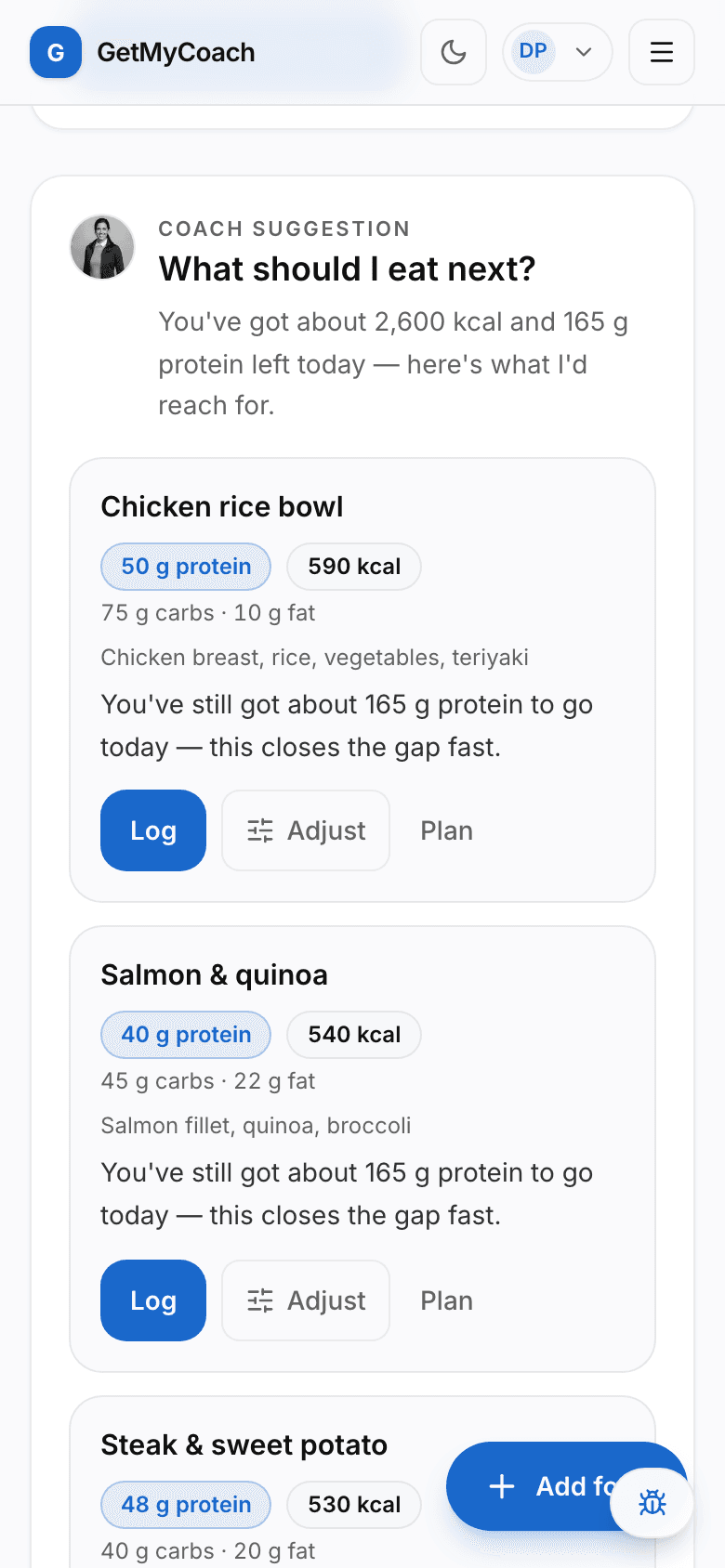
See how the whole thing works on the nutrition coach page.
Last updated: July 2026. This article is general educational information, not medical or nutritional-medicine advice. Calorie and sugar figures are typical approximate values and vary by brand and portion. If you have a medical condition or a history of disordered eating, talk to your doctor before making big dietary changes.