How Much Protein Do You Really Need? A Simple, Swiss Guide
The honest answer to how much protein you need per day — by goal, in grams — plus the high-protein foods (including plant-based) to hit it, and whether you need shakes at all.
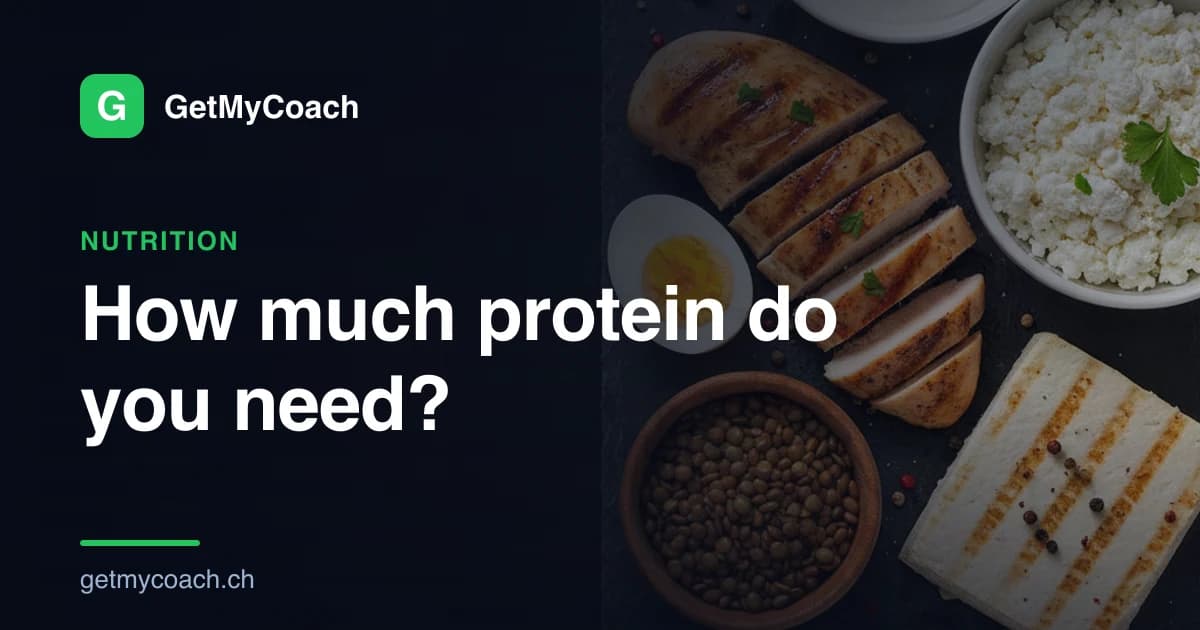
Protein is the most-searched topic in fitness — and most of that searching is people trying to answer one simple question: how much do I actually need? The number gets muddled by supplement marketing on one side ("more is always better") and old government minimums on the other ("you already get plenty"). The truth sits in between, and it's not complicated.
This is a plain, practical guide: how much protein you need for your goal, where to get it (including without meat), and how to stop guessing. No hype, no fear — just the number and the food.
The short version: If you train, aim for roughly 1.6–2.2 g of protein per kilo of bodyweight per day. Most people who ask "am I getting enough?" are actually a bit under. Spread it across the day, build meals around a real protein source, and treat powder as convenience — not magic.
How much protein do you actually need?
The right number depends on what you're doing with your body — not on the label of a tub. Here's the honest range by goal, per kilo of bodyweight per day:
| Your situation | Protein per kg / day | 70 kg person | 85 kg person |
|---|---|---|---|
| Mostly sedentary, general health | 0.8–1.2 g | 56–84 g | 68–102 g |
| Active / recreational training | 1.4–1.8 g | 98–126 g | 119–153 g |
| Building muscle | 1.6–2.2 g | 112–154 g | 136–187 g |
| Losing fat (keep the muscle) | 1.8–2.4 g | 126–168 g | 153–204 g |
| Older adult (50+), staying strong | 1.2–1.6 g | 84–112 g | 102–136 g |
Two things worth knowing behind these numbers:
- Muscle building tops out around 1.6 g/kg for most people. Large reviews of the research put the point of clearly diminishing returns near there — going to 2.2 g/kg is a sensible ceiling that adds a safety margin, not a magic boost.
- When you're dieting, protein goes up, not down. In a calorie deficit, more protein protects the muscle you already have and keeps you fuller. That's why the fat-loss row is the highest one.
If you use bodyweight in pounds, the quick version is roughly 0.7–1 g per pound for people who train.
Why more isn't better
Past a certain point, extra protein doesn't build extra muscle — your body just uses it for energy or clears it. Eating 250 g when your target is 150 g mostly means fewer carbs and fats in the same calorie budget, a lighter wallet, and no extra results.
The one real exception is the diet phase above: very lean people in an aggressive cut can benefit from the high end. For everyone else, hitting your target consistently beats overshooting it occasionally.
The win isn't in the highest number. It's in hitting a sensible target on most days.
Where to get it: high-protein foods
You don't need shakes to hit these numbers. Real food does the heavy lifting, and it keeps you fuller. Here's roughly what a normal portion delivers:
| Food | Portion | Protein |
|---|---|---|
| Chicken or turkey breast | 100 g | ~31 g |
| Magerquark (low-fat quark) | 250 g | ~30 g |
| Harzer / low-fat hard cheese | 100 g | ~28 g |
| Tuna / salmon | 100 g | ~22–25 g |
| Lean beef | 100 g | ~26 g |
| Skyr / Greek yogurt | 150 g | ~15 g |
| Cottage cheese (Hüttenkäse) | 100 g | ~12 g |
| Tofu | 100 g | ~12–15 g |
| Tempeh | 100 g | ~19 g |
| Eggs | 2 eggs | ~13 g |
| Cooked lentils / beans | 100 g | ~8–9 g |
| Edamame | 100 g | ~11 g |
| Milk | 200 ml | ~7 g |
In Switzerland these are all easy to find: Magerquark, skyr, cottage cheese and eggs at any Migros or Coop, plus tofu and tempeh in the chilled section. Build a meal around one of the top rows and you're most of the way to a good day.
Hitting your protein plant-based
You don't need meat to reach these numbers — it just takes a little more intention, because most plant foods carry protein alongside more carbs or fat.
- Anchor meals on the dense sources: tofu, tempeh, edamame, seitan, and soy products (soy milk, soy yogurt) are the plant equivalents of a chicken breast.
- Legumes do real work: lentils, chickpeas and beans bring 8–9 g per 100 g plus fibre — great as a base, just not as concentrated as tofu.
- Combine sources across the day. Individual plant proteins are a little lower in certain amino acids; eating a variety (soy + grains + legumes) over the day covers it easily. You don't need to "combine" at every single meal — the old rule was overstated.
- A plant protein powder (soy or pea) is a fair top-up if your day still comes up short — the same role a shake plays for anyone else.
A well-built vegetarian or vegan day hitting 1.6 g/kg is completely doable; it just rewards planning a bit more than a meat-eater's day does.
How to spread it across the day
Total daily protein matters most — but how you spread it helps a little, especially for muscle:
- Aim for a solid protein source at each main meal — roughly 20–40 g per meal, three to four times a day. That covers most people's target without thinking about it.
- The "anabolic window" is mostly a myth. You don't need a shake within 30 minutes of training. As long as you eat protein in the hours around your session, the timing is forgiving.
- Breakfast is where most people leak protein. A coffee and a croissant is near-zero. Quark, skyr, eggs or a protein-rich bowl in the morning is the single easiest fix for a low daily total.
Do you need protein powder or shakes?
Short answer: no — but it can be convenient. A "protein shake" is just protein powder (usually whey from milk, or soy/pea for plant-based) mixed with liquid — a fast ~25 g of protein when real food isn't handy.
- Use it as a tool, not a foundation. If you struggle to hit your target from food — no appetite in the morning, meals out, a hard evening schedule — a shake is an easy, planned portion.
- You never need it. Everything a shake does, quark, skyr, eggs or chicken do too — usually with more to chew on and better satiety.
- For the shop-shelf version — which bars and ready-to-drink protein products are actually worth it in Swiss supermarkets — see our protein bars & drinks buying guide.
The simple rule
If you remember nothing else:
- Pick your number: ~1.6 g/kg if you train, up toward ~2.2 g/kg building muscle or dieting hard.
- Build every main meal around a real protein source (see the table) — aim for 20–40 g each.
- Fix breakfast — it's usually where the day falls short.
- Use powder only to close a gap, not as the plan.
- Don't chase the highest number — hit a sensible one consistently.
The bottom line
Protein isn't complicated, and it isn't a supplement problem — it's a how-much-and-from-what problem. Most people who train do best somewhere between 1.6 and 2.2 g per kilo, mostly from normal food, spread across the day, with a shake only when real food isn't practical. Get that right and it quietly underpins everything else — muscle, recovery, staying full in a diet.
The catch is that your protein target moves with your goal, your weight and your training — a lean-bulk day looks different from a fat-loss day. That's exactly what GetMyCoach works out for you: a plan that sets your daily protein and calorie target from your goal and bodyweight, and adjusts as you go — so you stop guessing and just hit the number.
Get my protein & calorie target →
Last updated: July 2026. This article is general educational information, not medical or nutritional-medicine advice. Protein needs vary between individuals; if you have a kidney condition or another medical reason to watch your protein intake, talk to your doctor. Food protein values are typical figures and can vary by product and preparation — check the packaging when in doubt.