How to Lose Weight Without Counting Calories (or Tracking Every Gram)
The honest, no-hype guide to losing weight without counting every calorie: why a moderate deficit is the foundation that matters, how fast to aim for, how much protein keeps it fat loss (not muscle), and how to do it without weighing every gram.

Weight loss is the most over-complicated topic in fitness. Keto, fasting, "fat-burning" foods, detoxes, cutting carbs after 6pm — every one of them is a costume on the same simple idea. Strip the marketing away and losing weight comes down to a handful of things you can actually control, none of which require a special diet or a single supplement.
This is the honest version: what actually makes you lose fat, how fast you should aim for, and how to do it without weighing every gram or hating your life. No hype, no fear.
The short version: You lose fat when you eat a bit less energy than you burn, over time. Keep the deficit moderate (about 300–500 kcal), keep protein high so you lose fat and not muscle, build meals around protein and vegetables, and judge progress by the weekly trend on the scale — not any single day.
A quick example. Instead of a big plate of pasta with barely any protein, make it chicken or tofu, a pile of vegetables, a small portion of rice and some sauce. Not perfect — just repeatable. Most of what fat loss looks like day to day is a handful of swaps like that one.
The foundation that actually matters
Almost every diet that works, works for one reason: it puts you in a calorie deficit — you take in less energy than your body uses, so it makes up the difference from stored fat. Keto, fasting, low-carb, Weight Watchers, "clean eating" — none of them break this rule, they just find different ways to get you eating less without noticing.
That doesn't make it pure arithmetic. Sleep, stress, medication, your menstrual cycle, water weight and illness all move the scale and how you feel — so when a week doesn't go to plan, look there before you slash calories further.
That's genuinely good news, because it means you don't have to follow anyone's specific diet. You have to find the version of "slightly less than I burn" that you can live with. The best diet is the one you'll still be doing in three months.
So the goal isn't to find a magic food to add. It's to build a way of eating you can repeat — that happens to land a little under your maintenance calories.
How fast should you actually lose?
Faster is not better. Lose too fast and most of what comes off is muscle and water, you're hungry and miserable, and it comes straight back. A sustainable rate keeps the weight off and protects your muscle.
| Your goal | Weekly loss | Rough daily deficit |
|---|---|---|
| Lots to lose, want visible progress | ~0.75–1% of bodyweight | ~500–700 kcal |
| The sensible default | ~0.5–0.75% of bodyweight | ~300–500 kcal |
| Already lean, protecting muscle | ~0.25–0.5% of bodyweight | ~200–300 kcal |
For an 85 kg person, the sensible default is roughly 0.5 kg a week. That doesn't sound dramatic — but it's about 26 kg in a year if you needed it, and you'd barely feel deprived. Chasing 1.5 kg a week instead is how most diets fail by week three.
A slow diet you finish beats a fast one you quit.
Protein is what makes it fat loss
Here's the single most important upgrade over "just eat less": eat enough protein. In a deficit, your body will take material from wherever it can — including muscle. High protein tips that balance toward keeping muscle and burning fat, and it keeps you fuller on fewer calories.
Aim for the higher end while dieting — roughly 1.8–2.4 g of protein per kilo of bodyweight per day. Build every main meal around a real protein source and it mostly takes care of itself. If you're carrying a lot of excess weight, base that on your target weight or lean body mass rather than the number on the scale today — otherwise the target comes out unrealistically high. (We wrote a whole plain-English guide on how much protein you actually need and where to get it, meat or plant-based.)
Protein also does something diets rarely deliver: it makes the food satisfying. A breakfast of quark and berries keeps you full for hours; a croissant and coffee is gone by ten and leaves you hunting for a snack.
You don't need to weigh every gram
The biggest reason people quit is that tracking becomes a second job. You do not need a food scale and a spreadsheet to lose weight. Precision isn't the point — consistency is.
A few honest habits beat perfect logging:
- Build the plate: half vegetables, a palm or two of protein, a fist of carbs, a thumb of fats. Do that most meals and you're roughly in a deficit without counting.
- Watch the calories you drink. Juice, soft drinks, beer, wine and big milky coffees are the quiet killers — hundreds of calories that don't fill you up at all. Swapping to water, coffee and zero-sugar drinks is often the single biggest win.
- Don't ban foods — budget them. A total ban on chocolate just guarantees a blowout later. A square after dinner that fits your day never becomes a binge.
- Fix breakfast and the first snack. That's where most people's day quietly runs 500 calories high.
Logging does help — but the useful kind is fast (log a meal by name, not by weighing every ingredient) and honest, not obsessive.
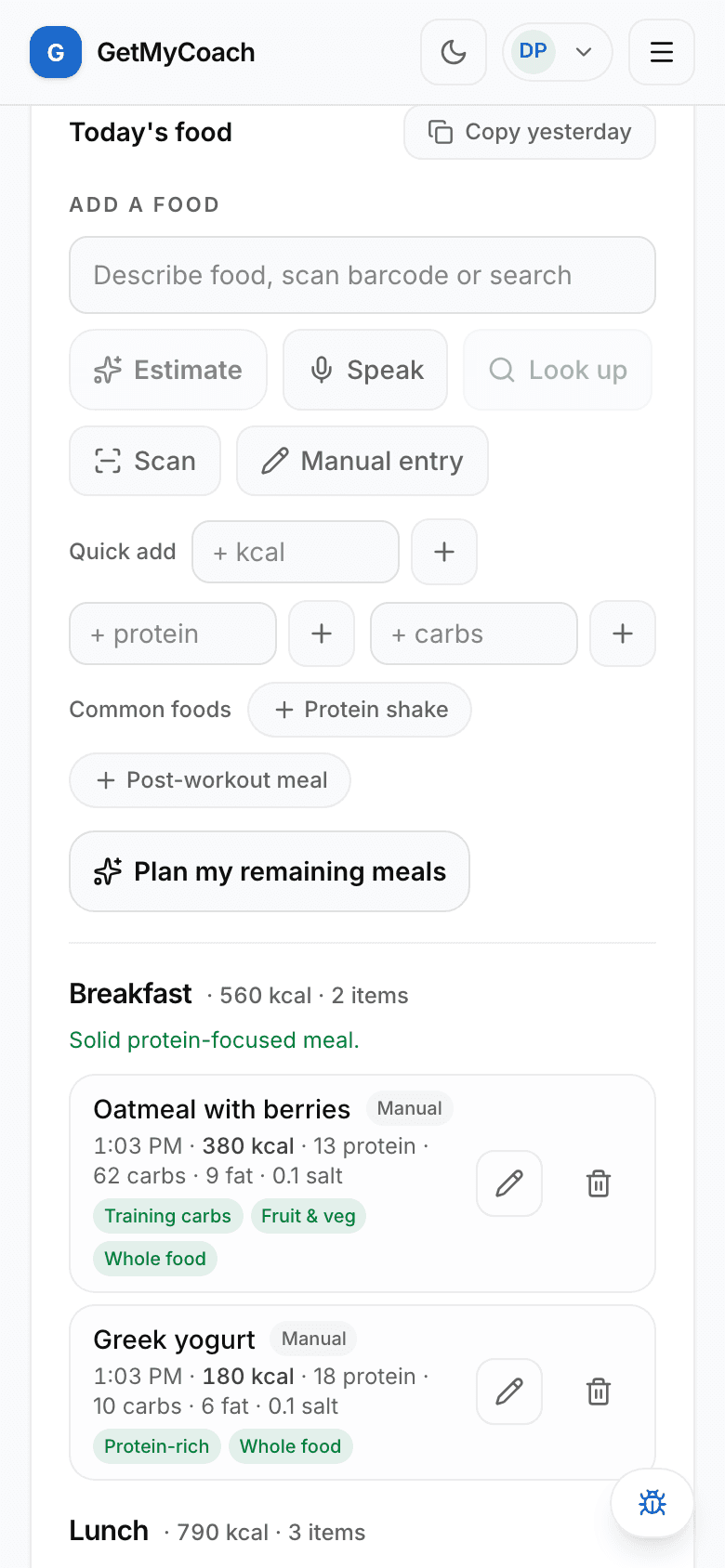
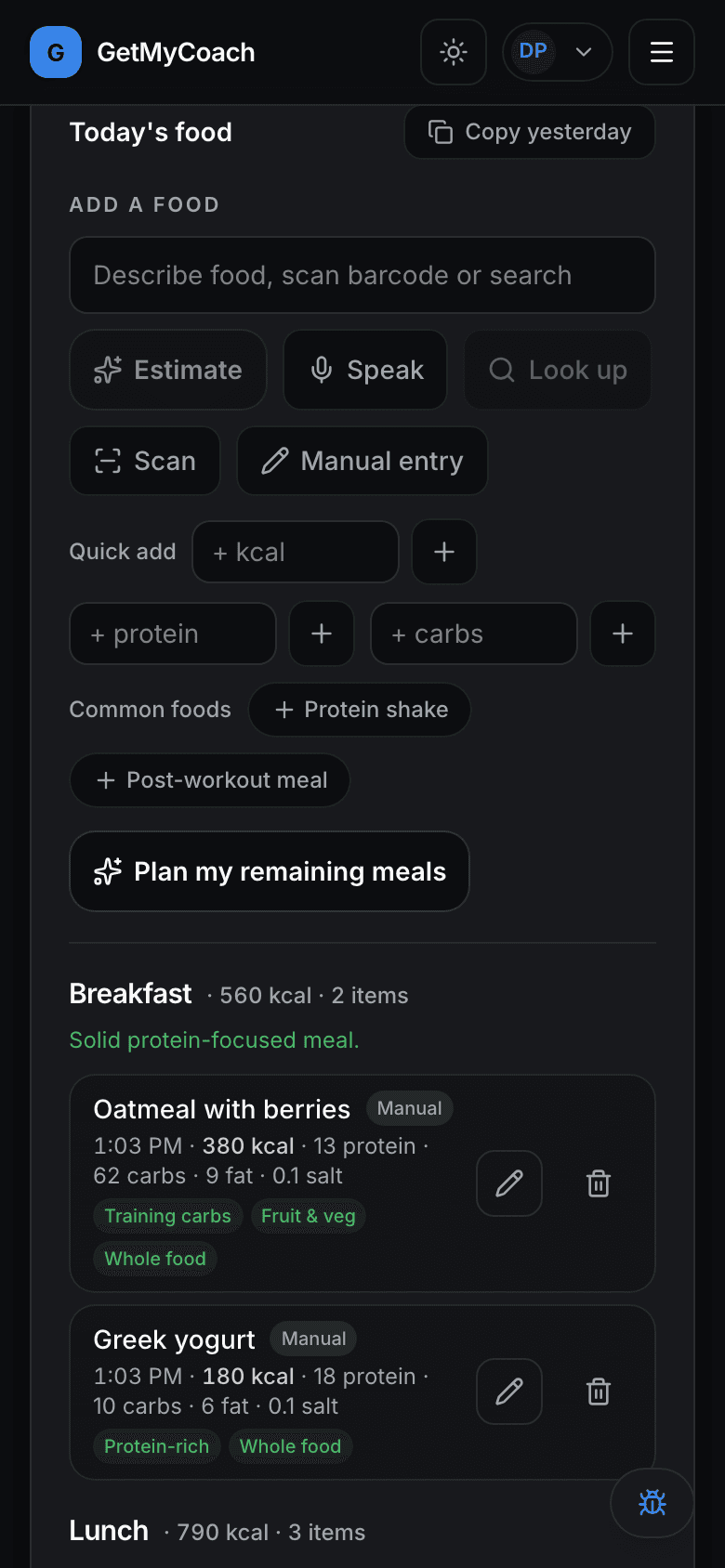
That's exactly what GetMyCoach is for: you log meals, not every ingredient — and the coach then shows you what still makes sense for the rest of the day to land on your protein and calories.
The scale lies day to day
Your weight can swing 1–2 kg overnight from water, salt, carbs and what's still in your gut — none of it fat. If you weigh daily and react to every wobble, you'll quit in frustration during a week you were actually losing fat.
So change what you look at: weigh a few times a week and judge the trend over 2–3 weeks, not the daily number. A wiggly line that's drifting down is exactly what fat loss looks like. If the trend is genuinely flat for three weeks, then it's time to trim a little more.
Training helps — but the kitchen decides
You cannot out-train a bad diet. An hour of hard training might burn 400–600 calories; a single large takeaway puts it all back in ten minutes. Fat loss is driven by how you eat.
That doesn't make training pointless — it's the opposite. Lifting weights while you diet is what tells your body to keep the muscle instead of burning it for fuel, so what's left when the fat comes off actually looks and performs the way you want. Cardio is a useful lever for adding a bit more deficit and for your heart — not the main event.
The common traps
- Crash diets. 1,000 kcal a day works for a fortnight, then your energy, mood and muscle crater and you rebound. Moderate beats extreme every time.
- "Carbs make you fat." Cutting carbs drops water weight fast — which looks great on the scale and fools you into thinking it's fat. Carbs aren't the enemy; excess total calories are.
- The weekend undo. Four tight weekdays plus two loose weekend days often nets out at maintenance. The week is what counts, not the weekday.
- All-or-nothing. One off-plan meal isn't a failure and doesn't need "making up for." Just carry on at the next meal.
The simple system
- Set a moderate deficit — about 300–500 kcal under maintenance. Sustainable, not heroic.
- Get your protein up — ~1.8–2.4 g/kg, a real source at every main meal.
- Build the plate — half veg, protein, some carbs, a little fat — and manage what you drink.
- Judge the weekly trend, not the daily scale.
- Keep lifting to hold your muscle, so you lose fat and not shape.
- Make it repeatable — the plan you can keep beats the plan that's "optimal."
Frequently asked questions
Can I lose weight without counting calories?
Yes. You don't have to log every gram — build most meals around protein and vegetables, keep an eye on what you drink, and judge the weekly trend on the scale. Counting can be a useful reality check when progress stalls, but consistency beats precision.
How much protein do I need to lose weight?
For people who train, roughly 1.8–2.4 g per kilo of bodyweight per day — the higher end protects muscle in a deficit. If you have a lot of weight to lose, base it on your target weight or lean body mass instead. More in our protein guide.
How fast should I lose weight?
About 0.5–0.75% of your bodyweight per week for most people — very roughly 0.3–0.7 kg. Faster mostly costs muscle and tends to rebound.
Do I have to cut carbs?
No. Cutting carbs drops water weight quickly, which looks dramatic on the scale but isn't fat. Total calories drive fat loss, and carbs around training actually help you train and recover.
Is training alone enough to lose weight?
No — you can't out-train a bad diet. Training, especially lifting, protects your muscle while you diet, but the deficit itself comes from how you eat.
The bottom line
Losing weight isn't a willpower contest or a diet-brand decision. It's a moderate calorie deficit, enough protein to keep your muscle, meals you can actually repeat, and the patience to judge the trend instead of the day. Do that and the weight comes off and stays off — no detox required.
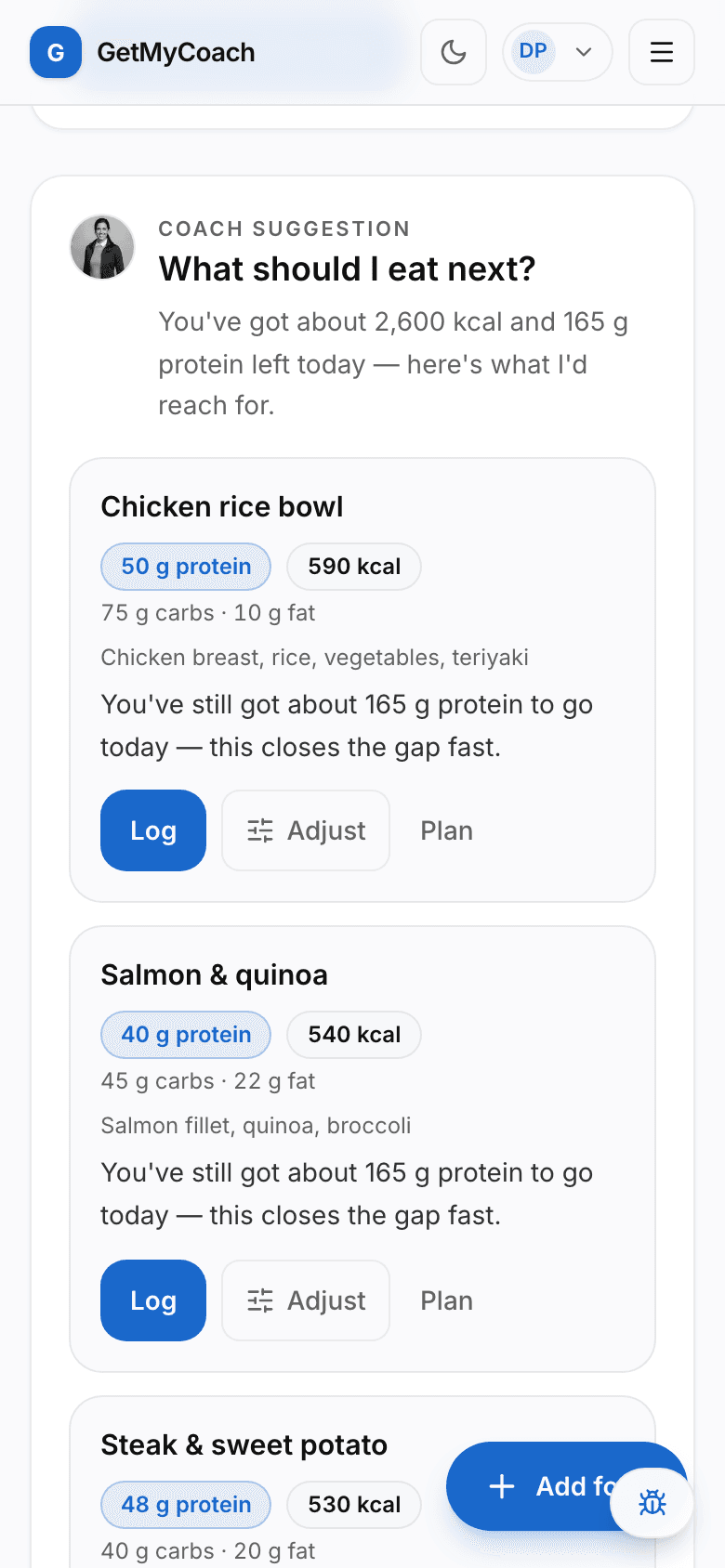
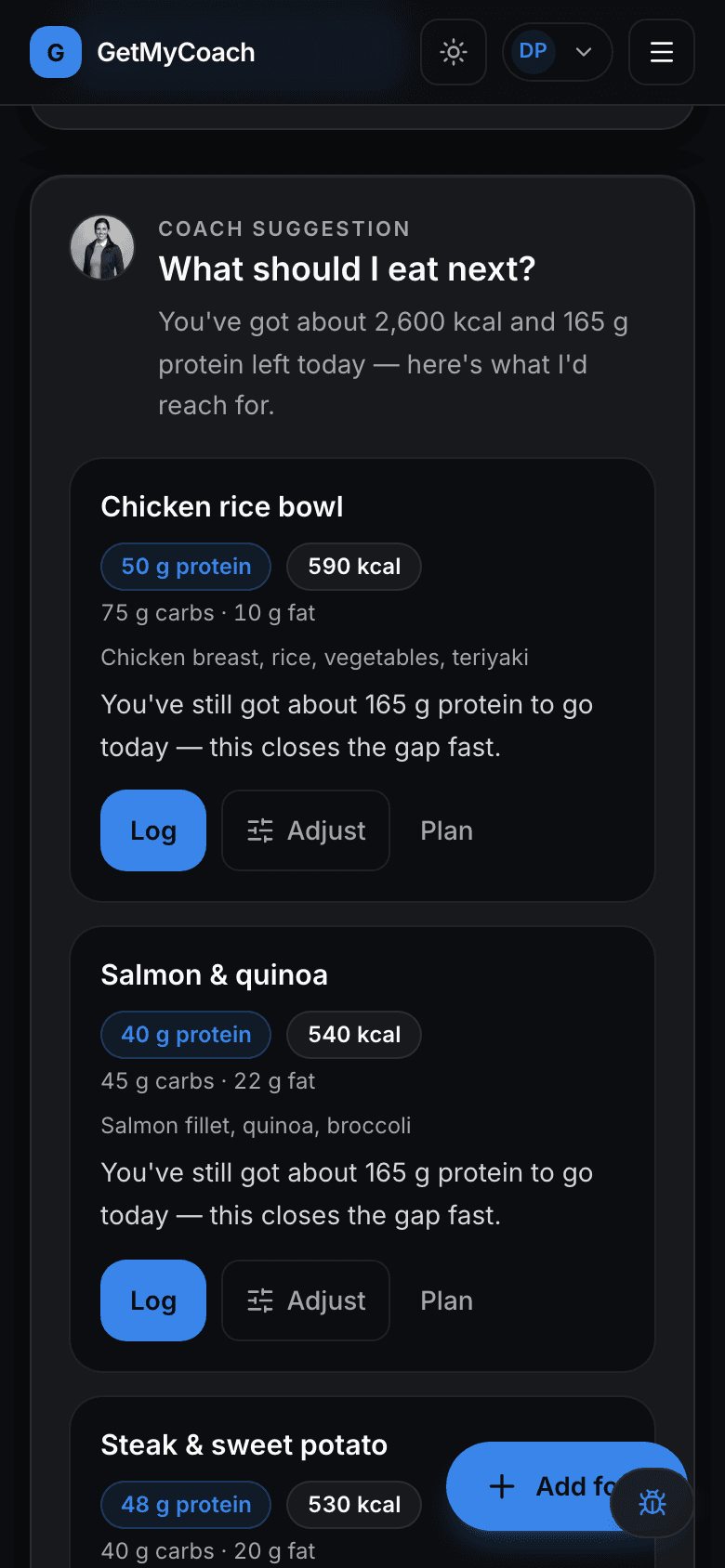
The hard part isn't the theory — it's turning it into today's lunch. That's exactly what GetMyCoach does: it sets your daily calorie and protein target from your goal and bodyweight, scores how well you ate, and — the part most apps skip — tells you what to eat next, turning the calories and protein you have left into two or three concrete meals you can log in a tap. It can even plan the rest of your day to land on your targets. No training plan required — you can use the nutrition coach on its own.
See how the whole thing works on the nutrition coach page.
Start losing weight with a coach →
Last updated: July 2026. This article is general educational information, not medical or nutritional-medicine advice. If you have a medical condition, are pregnant, or have a history of disordered eating, talk to your doctor before starting a calorie deficit. Individual calorie and protein needs vary — the figures here are typical starting points, not prescriptions.