Squash Conditioning: How to Improve Your Match Endurance
What match endurance really is, why steady jogging won't build it, and the interval conditioning — court intervals and ghosting bursts on a small aerobic base — that keeps you sharp deep into the fifth game.
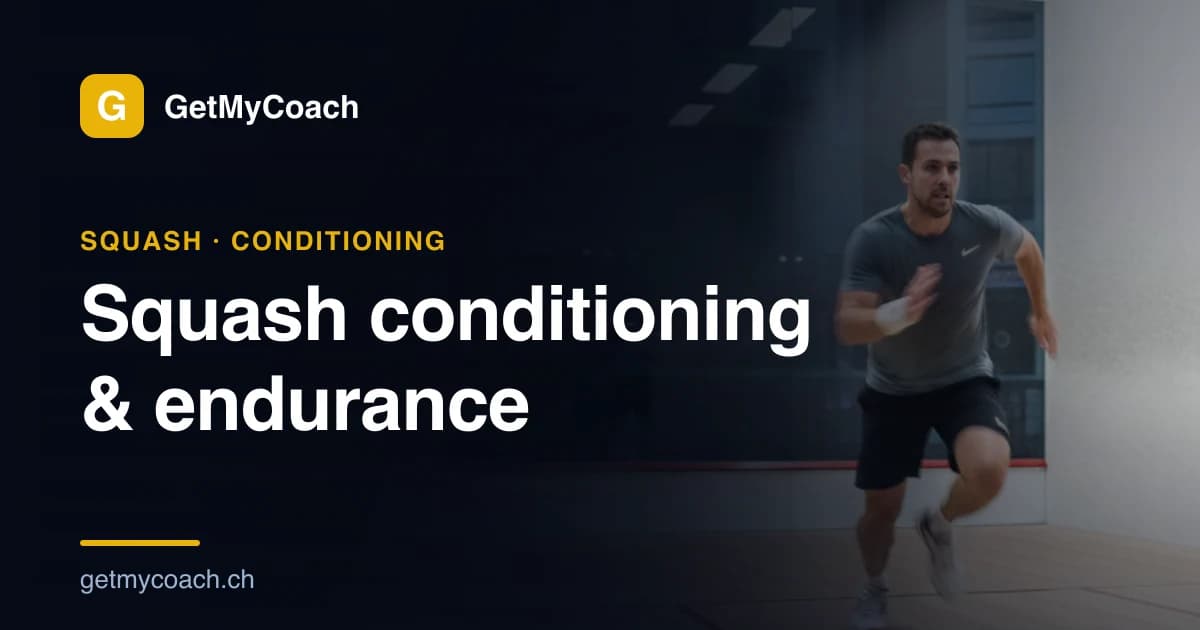
Most matches aren't lost on technique — they're lost in the legs. You've felt it: two games in, the ball you'd normally reach is suddenly a step away, your shots get loose, and the player who kept moving takes over. That's a conditioning gap, and it's one of the most fixable things in squash. This is how to close it.
This is a practical guide to squash conditioning — what match endurance really is, why steady jogging won't build it, and the interval work that keeps you sharp deep into the fifth game.
The short version: Squash is repeated hard efforts with short recovery, not a steady run — so you train it that way. Build a base of easy aerobic work for recovery, then do the real work with intervals that mirror the rally: hard bursts and ghosting, short rests, repeated. Progress by adding rounds or shortening the rest, and you'll fade later and recover faster between points.
What "match endurance" actually is
Match endurance in squash isn't the ability to jog for an hour — it's the ability to repeat short, explosive efforts without slowing down, and to recover in the few seconds between points. A rally lasts seconds; the gap before the next one is short; and this pattern repeats for an hour or more. The quality that decides matches is how well you hold your speed and sharpness as those bursts pile up.
That's why a player who runs 10K comfortably can still gas out on court. Steady running builds an aerobic base — useful, but only half the picture. The other half is repeat-sprint ability and fast recovery between efforts, and you only get those by training in bursts.
The two engines you're training
- The aerobic base is your recovery system. It's what refills the tank in the seconds between points and between games, and it lets you back up hard rally after hard rally. You build it with easy, conversational-pace cardio — a run, a bike, a row — and it's the foundation everything else sits on.
- The high-intensity, repeat-sprint engine is your match speed. It's what lets each burst stay explosive instead of decaying into a jog. You build it with intervals: short, hard efforts with controlled recovery, done until you can repeat them without fading.
Most club players have too little of both, and almost no repeat-sprint work. The fix isn't more slow miles — it's the right intervals.
The training that actually works
1. A small aerobic base
One or two easy sessions a week — 25–40 minutes of running, cycling or rowing at a pace where you could still talk. This isn't the exciting part, but it's the recovery engine that makes your hard sessions and your matches possible. Keep it genuinely easy; the hard work happens elsewhere.
2. Court intervals — the key session
This is the session that mirrors squash. The template is simple: hard bursts with short recovery, repeated in rounds. For example, 4–6 rounds of 30 seconds of hard ghosting to the four corners, then 60–90 seconds of easy movement, repeated. The rule that makes it work: hard but repeatable — your last round should look like your first. If you die halfway, you went out too hard.
Ghosting (shadowing your movement to each corner without a ball) is the ideal tool because it trains movement and conditioning at once. Court shuttles and repeat sprints work just as well. This is the session that shows up most in a real match.
3. On-court conditioning games
Long-rally drills, ghosting circuits and hard practice games with a partner double as conditioning while sharpening your squash. They're the most sport-specific of all — the closest thing to match demand — so use them when you can.
How to progress it
Conditioning improves when the work gets slightly harder over time — not when you smash yourself every session. Sensible progression:
- Add a round as the weeks build (five rounds becomes six), or
- Hold the rounds and shorten the rest (90 seconds down to 60), or
- Extend the work slightly (30 seconds becomes 40).
Change one variable at a time, then take an easier week to absorb it before pushing again. That planned rise and recovery — structure beats random hard sessions — is what turns a few weeks of work into a real jump in match fitness.
Don't forget recovery
Hard conditioning only pays off if you recover from it. Keep at least one genuinely easy day a week, sleep, and don't stack your hardest interval session the day before an important match. Conditioning is one of the four pillars of squash fitness — it works best alongside sharp footwork and the leg and core stability that lets you keep lunging when you're tired, not in place of them.
The bottom line
You don't build match endurance by jogging — you build it by training the way squash moves: hard bursts, short recovery, repeated, on a base of easy aerobic work. Do that consistently and the difference is obvious: you reach balls in the fourth game you used to lose in the second, and you're the one still moving at the end.
GetMyCoach programs exactly that — court intervals and conditioning matched to your level and progressed week to week, so your engine keeps up with your racket.
Get my squash plan → · or see it on the squash training plan page.
Frequently asked questions
How can I improve my squash endurance? Train the way squash moves: a small base of easy aerobic cardio for recovery, plus interval sessions of hard bursts and ghosting with short rests, repeated in rounds. Progress by adding rounds or shortening the rest. Steady long-distance running alone won't do it — squash needs repeat-sprint fitness.
Is running good for squash? Easy running builds the aerobic base that helps you recover between points and games, so it's useful as a foundation. But squash is intermittent and explosive, so steady running alone isn't enough — you also need interval and repeat-sprint work that mirrors the rally.
What are court intervals? Short, hard efforts — often ghosting to the four corners or shuttle sprints — followed by a short easy recovery, repeated in rounds. The key is "hard but repeatable": your last round should match your first. It's the single most match-specific conditioning session in squash.
How long does it take to get fitter for squash? Most players notice a real difference in four to six weeks of consistent conditioning — two to three focused sessions a week alongside playing. The gains come from steady, progressive work, not one brutal week.
Last updated: July 2026. General educational information, not medical advice. If you have a health condition or an injury, or haven't trained in a while, check with a doctor before starting a new program.